2026-11-18 ·
Tree Roots and Sewer Lines in the Highlands
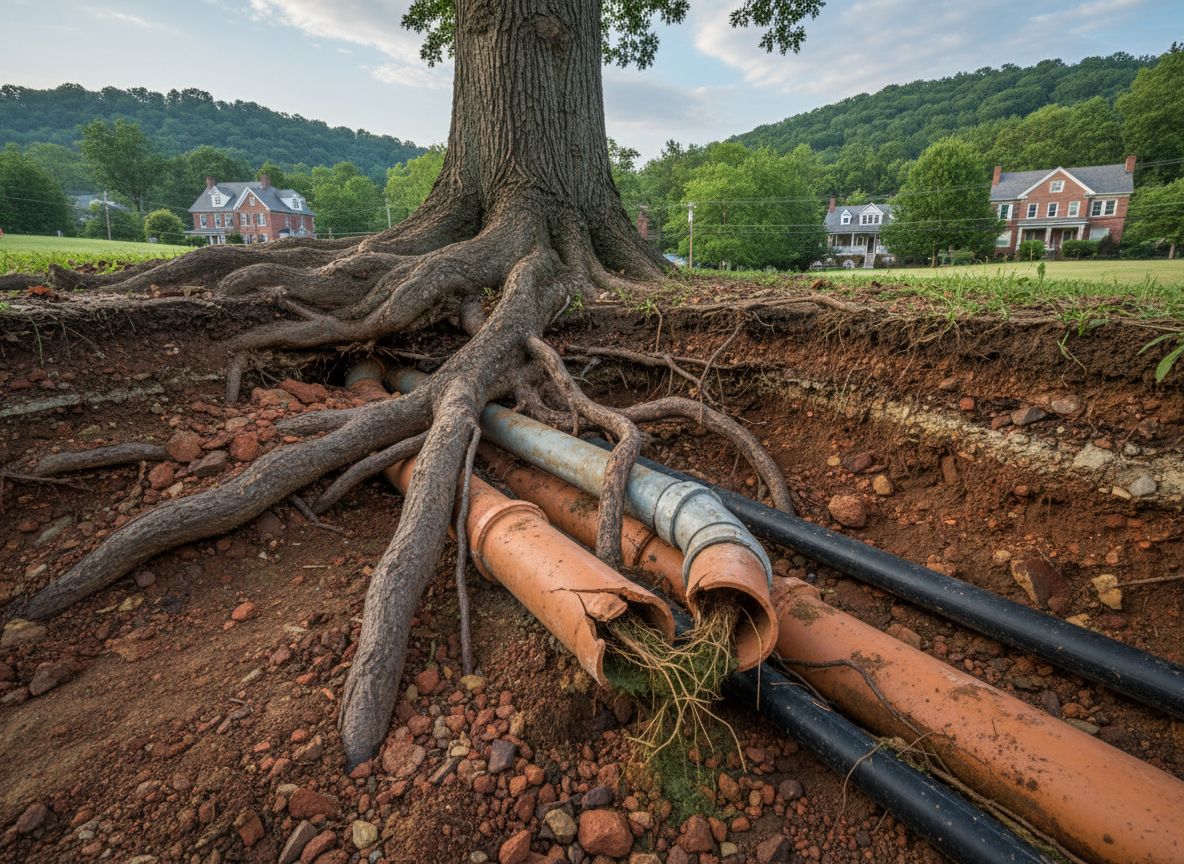
Tree roots commonly reach sewer lines in the Highlands because the neighborhood's established maples, oaks, and elms send roots toward the consistent moisture found in older clay and cast-iron pipes beneath streets like Bardstown Road and Baxter Avenue. These intrusions begin small but expand over seasons as roots follow the path of least resistance into pipe joints.
Root Growth Patterns Around Highlands Properties
Mature trees planted decades ago line many Highlands yards and parkways, sending lateral roots 20 to 30 feet outward in search of water. Louisville's humid subtropical climate supplies steady summer rainfall that keeps soil moist, encouraging continued root expansion even during mild winters when growth slows but never fully stops. Older homes in the area often have clay tile sewer lines with mortar joints that separate over time, creating entry points. Roots exploit these gaps, then thicken inside the pipe and trap debris. Homeowners along streets with large street trees notice problems more often because the public right-of-way trees also contribute roots. Regular observation of tree proximity to the sewer cleanout location helps identify higher-risk properties before blockages form.
Visible Signs of Root Intrusion
Slow drains that worsen after heavy rain point to partial blockages where roots have narrowed the pipe. Gurgling sounds from toilets or floor drains occur when air becomes trapped behind root masses. Recurring clogs in the same fixture despite attempts at plunging suggest the obstruction lies farther down the main line. In severe cases, sewage may back up into basement floor drains during peak usage periods. These patterns differ from simple grease clogs because they return within weeks rather than months. Checking the cleanout cap for fine root hairs provides an early visual cue before full blockage develops.
Practical Steps to Reduce Root Pressure
Plant new trees at least 20 feet from known sewer line routes and choose slower-growing species with less aggressive root systems. Keep existing trees pruned so they do not require extra water uptake from the soil near pipes. Avoid planting vegetable gardens or flower beds directly above the sewer path, as frequent watering in those areas draws roots closer. Schedule periodic main sewer line cleaning to clear minor root hairs before they mature. Installing a sewer camera inspection every few years reveals early joint separation and root entry points while the pipe remains intact. These inspections also help differentiate between city main issues and private lateral problems common in the Highlands.
When Assessment Becomes Necessary
Persistent slow drainage after multiple attempts at clearing indicates roots have likely formed a dense mass requiring mechanical removal. Changes in yard surface, such as small sinkholes or unusually lush grass strips above the sewer path, can signal pipe damage allowing nutrient-rich water to escape. Homes built before 1970 in the Highlands frequently have original clay lines that benefit from proactive evaluation rather than waiting for an emergency. Linking to resources on maintaining drains in historic Louisville homes provides additional context for older properties. If roots are confirmed, sewer line repair options range from spot excavation to trenchless methods depending on the extent of intrusion and pipe condition. Consistent monitoring prevents small root issues from becoming full line replacements.