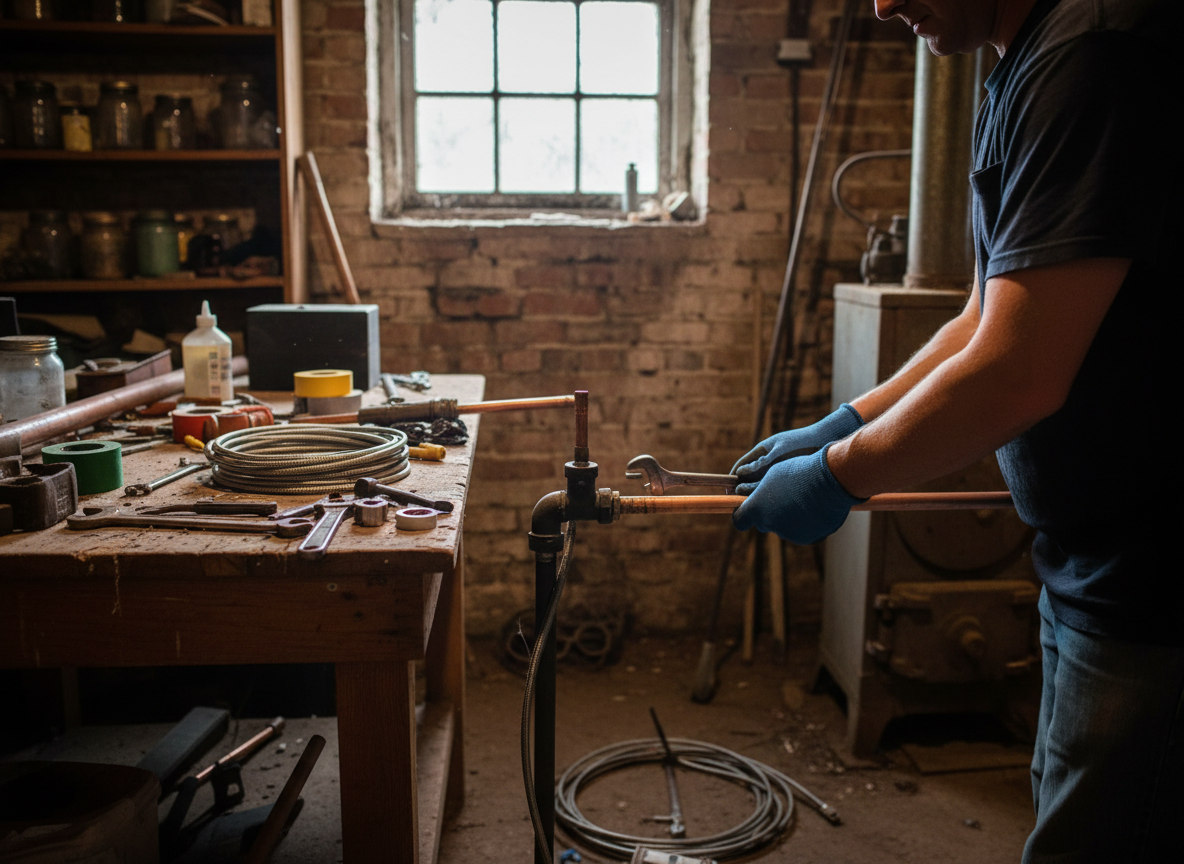
Gas line work in Jefferson County homes often starts with locating existing lines that run parallel to clay or cast iron sewer laterals in basements and crawl spaces. Plumbers use electronic locators and camera inspection to trace routes without excavation whenever possible. Once the line is exposed, sections are cut out and replaced with approved CSST or black iron pipe rated for local soil conditions and mild winter freeze-thaw cycles.
Heavy summer rains and root intrusion common around Louisville properties can shift or damage gas lines that share trenches with sewer pipes. Technicians isolate the gas supply at the meter, pressure-test new joints, and restore service only after confirming zero leaks with calibrated gauges. Sump pit installations require extra care to keep gas piping above potential water levels during storms.
Homeowners are warned against attempting DIY repairs on lines that may run near buried utilities or through finished basement walls. Proper permitting and coordination with local inspectors are required for any replacement that alters the original layout in older Jefferson County housing stock.
Technician insight
In Louisville the thing that catches most people out with Gas Line Repair is how often the gas line shares the same shallow trench as the old cast iron sewer lateral; when roots push the sewer, they bend the gas line too, and any basement work has to account for the sump pit overflow path during heavy rains.
Gas Line Repair Services We Offer
✓Residential Gas Line Inspection
Detailed camera and pressure checks identify corrosion or root damage on lines serving furnaces and water heaters in basements.
✓Underground Gas Line Replacement
Trenchless or open-cut methods replace aging black iron or CSST lines that run alongside clay sewer laterals in Louisville yards.
✓Basement Gas Line Relocation
Lines are rerouted above sump pits and away from moisture-prone areas to meet current safety spacing in older homes.
✓Gas Appliance Connection Repair
Flexible connectors and shut-off valves are replaced on stoves, dryers, and fireplaces to stop small leaks before they grow.
✓Root-Damaged Gas Line Repair
Roots that have crushed or infiltrated gas piping near cast iron sewers are removed and the line is sleeved or replaced.
How it works
- 1
Site Assessment
The plumber examines the property layout, locates the meter, and reviews any known clay or cast iron sewer routes in the basement.
- 2
Line Tracing and Isolation
Electronic locators and cameras map the gas line path, then the supply is shut off and the area is prepared for safe access.
- 3
Repair or Replacement
Damaged sections are cut out and new pipe is installed with proper fittings, keeping clear of nearby sewer lines and sump pits.
- 4
Testing and Restoration
Pressure testing confirms integrity before gas is restored and the work area is returned to its original condition.
Pricing
pricing depends on the job and is discussed with the plumber after you call