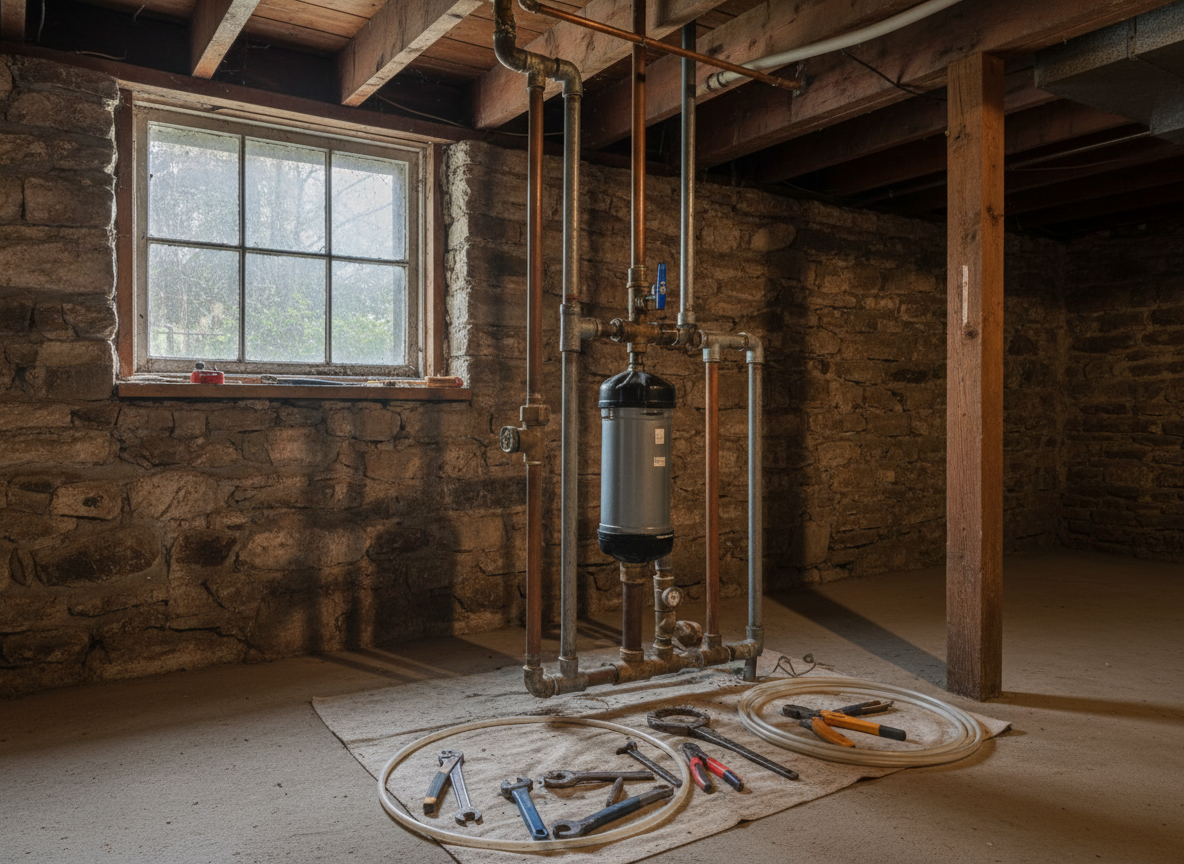
Backflow prevention work begins with locating the main sewer lateral, often clay or cast iron in Jefferson County homes, then checking where it enters the basement or connects to a sump pit. The plumber uses a camera inspection to trace the line and identify points where pressure changes could allow contaminated water to reverse flow. In Louisville's humid subtropical climate, heavy spring and summer rains raise groundwater levels, increasing the chance of backflow through older joints already stressed by tree roots.
Equipment includes a backflow test kit with gauges, shutoff valves, and sometimes a jetter to clear minor root intrusion before installing or replacing a preventer. Plumbers commonly work in basements where the device mounts on the main line above the floor drain or near the sump pit. Freeze-thaw cycles, though milder than farther north, can still crack exposed piping during occasional winter dips, so any above-grade sections receive insulation or heat tape during the repair.
Warnings focus on older neighborhoods where cast iron has thinned and clay sections have shifted. Attempting to clear a blockage without first isolating the backflow device can force sewage into living spaces. Homeowners should avoid running water during testing and keep the area around the sump pit clear so the plumber can reach the line without obstruction.
Seasonal Considerations
Heavy rain events common from late spring through early fall often coincide with root growth that penetrates clay laterals, creating pathways for backflow. Mild winters still produce enough freeze-thaw action to loosen cast iron joints in unheated basements, so annual checks before the rainy season help prevent sudden failures.
Technician insight
In Louisville, the thing that catches most people out with Backflow Prevention is clay laterals that have bellied under the basement slab; roots get in during mild winters, then a single heavy summer rain pushes sewage back through a sump pit before the preventer can seat properly.
Backflow Prevention Services We Offer
✓Backflow Valve Testing
Plumbers test existing backflow devices on clay and cast iron laterals to confirm they block reverse flow from sump pits during heavy Jefferson County rains.
✓Backflow Preventer Installation
New preventers are installed on basement main lines where older cast iron meets clay laterals, protecting homes from contaminated water pushed by root blockages.
✓Residential Backflow Repair
Repairs address failed valves or cracked housings in sump pit setups common in Louisville basements with shifting clay pipe sections.
✓Lateral Line Backflow Assessment
Camera inspection of clay and cast iron laterals identifies root intrusion points that allow backflow during freeze-thaw or heavy rain periods.
✓Sump Pit Backflow Protection
Dedicated devices or check valves are added at sump pit discharges to stop groundwater and sewage from reversing into basements after storms.
How it works
- 1
Site Evaluation
The plumber inspects the basement, locates the clay or cast iron lateral, and notes sump pit placement before any testing begins.
- 2
Camera Inspection
A line camera travels the lateral to spot roots, joint separations, and potential backflow entry points caused by heavy rain or shifting soil.
- 3
Testing or Repair
The preventer is tested with gauges or repaired or replaced if pressure readings show it cannot hold against reverse flow.
- 4
Final Verification
Water is run through the system while monitoring the device to confirm backflow protection holds under normal Louisville household loads.
Pricing
pricing depends on the job and is discussed with the plumber after you call